
Skip to content
The Salt Clinic

Research · curiosity · care

The Science of Feeling Better

There is real, fascinating research behind salt, light, oxygen and heat. Understand what scientists are finding, why the details matter and what it means — and does not mean — for your visit in Lisburn.

Established for specific use

Supported by clinical guidelines or consistent good-quality trials — usually in medical settings with defined devices and doses.

Promising

Encouraging research findings, interpreted in the context of study design, population and equipment.

Still being studied

Research is ongoing or the exact wellness application is not established. Uncertainty is not proof of no effect.

Explore the research

Four questions worth following.

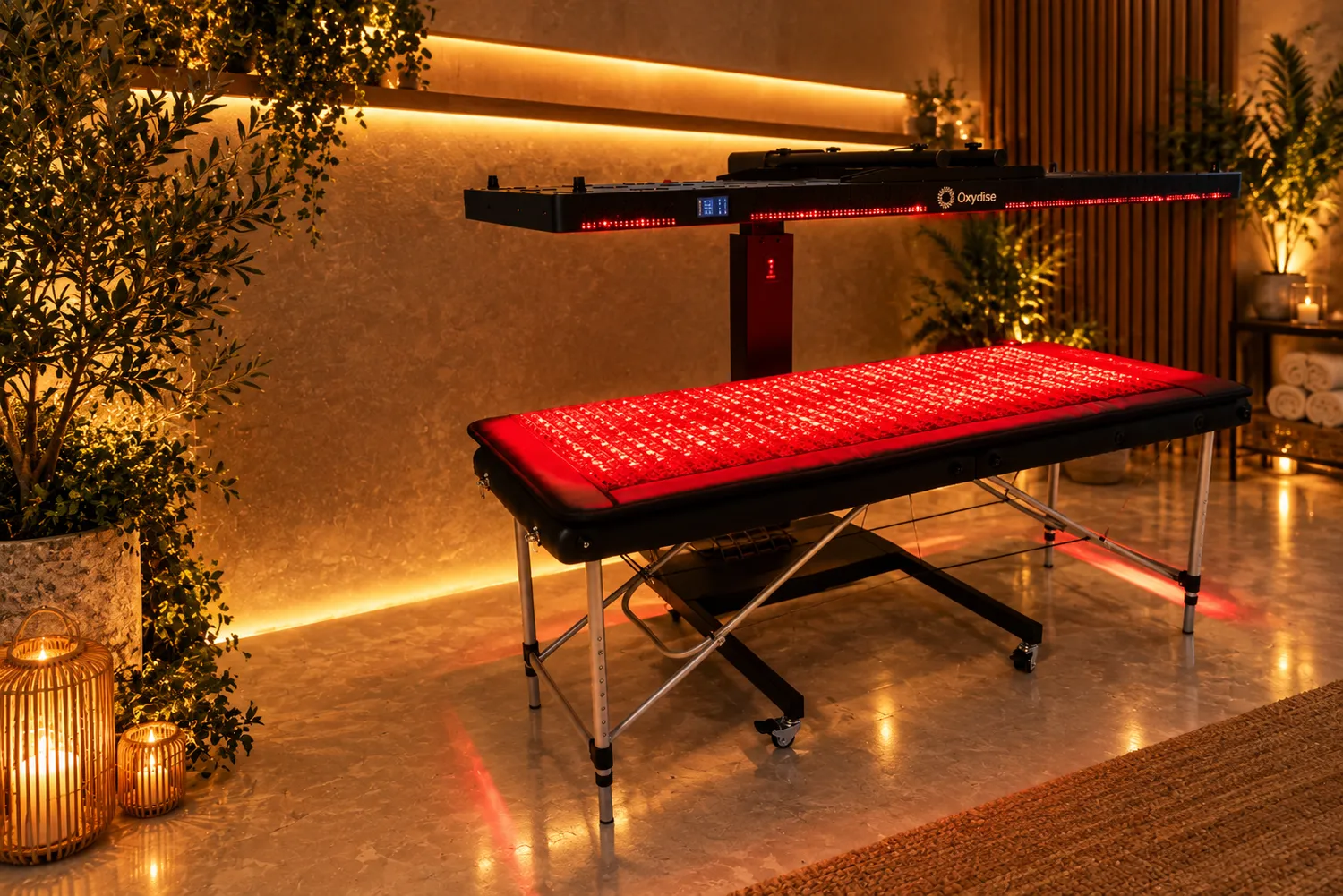
Photograph of equipment at The Salt Clinic in Lisburn

Salt, stillness & the breath

Small randomized studies have found encouraging changes in bronchial responsiveness — how readily airways narrow during a test — and some quality-of-life measures. Those signals deserve attention. They sit alongside unchanged lung-function measures and unresolved questions about dose, lasting effects, disease control and who might benefit. Robust evidence for asthma or COPD treatment is not established.

Explore the research
Photograph of equipment at The Salt Clinic in Lisburn

Light, cells & possibility

Researchers study particular outcomes such as hair density, skin changes, pain and tissue repair, using different devices and protocols. A positive result for one condition is not proof of a general full-body wellness effect.

Explore the research
Photograph of equipment at The Salt Clinic in Lisburn

Pressure, oxygen & precision

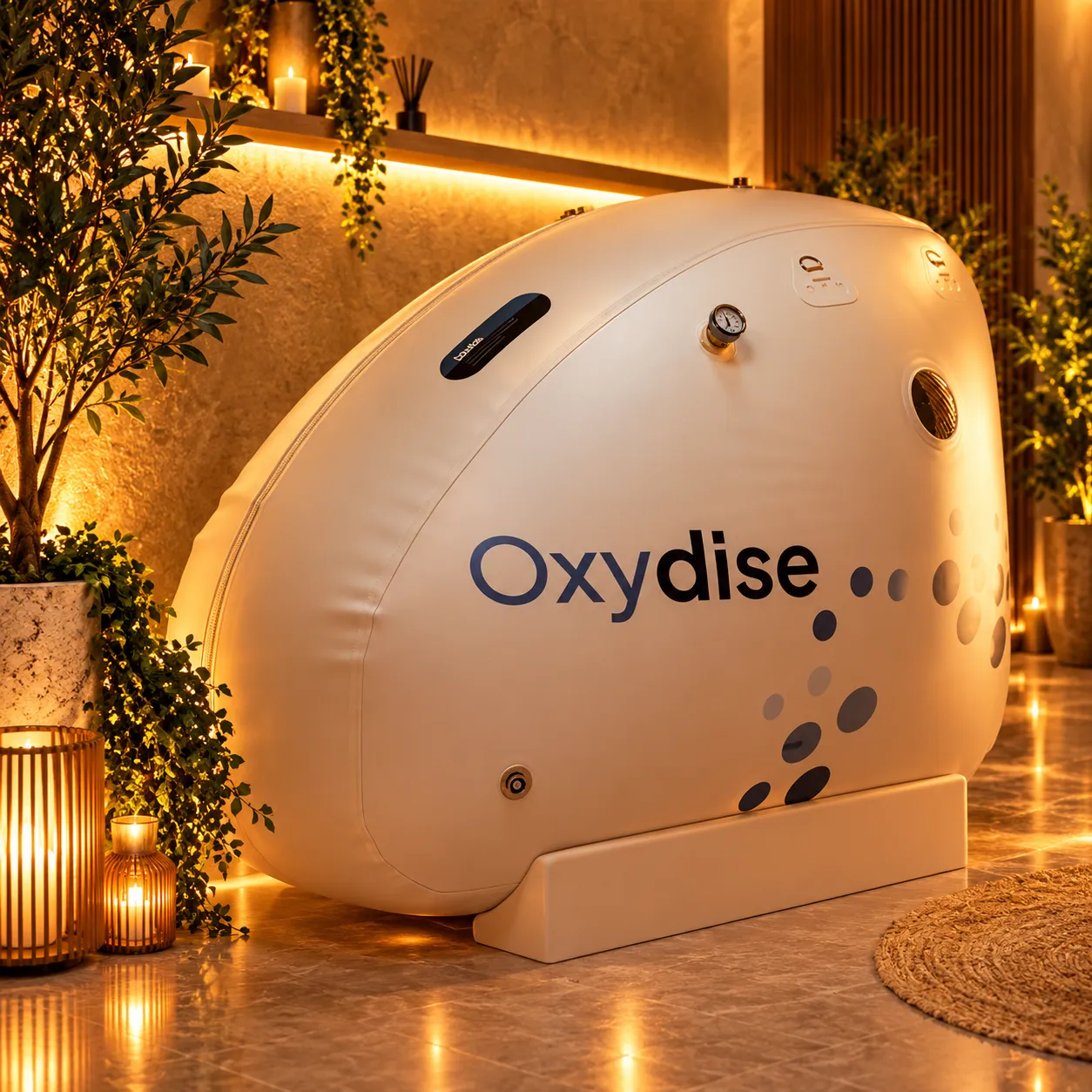
Clinical teams investigate specific indications, timing, pressure and treatment schedules. Wellness use in lower-pressure chambers is a separate question; promising clinical research cannot establish benefit for an unspecified seated chamber.

Explore the research
Photograph of equipment at The Salt Clinic in Lisburn

Heat, circulation & a slower pace

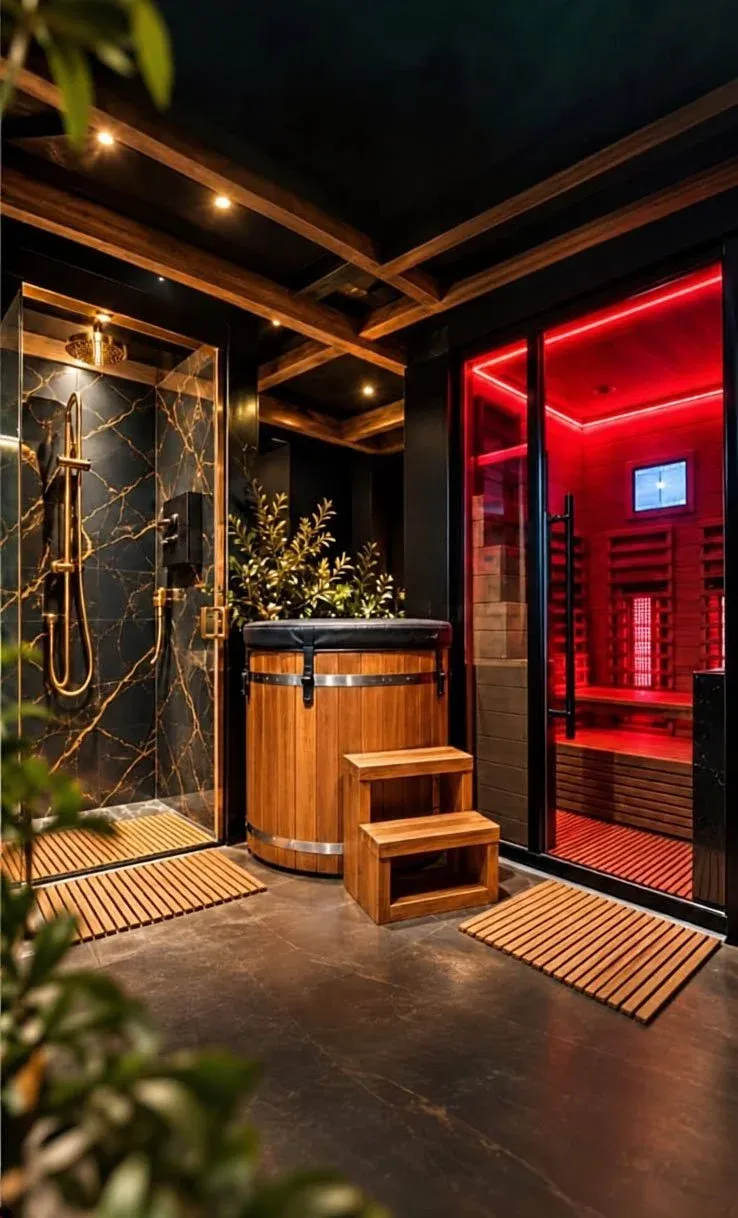
Researchers examine cardiovascular associations, blood-pressure responses and the role of repeated heat exposure. Long-term Finnish research is encouraging, but observational associations and short-term physiological changes answer different questions.

Explore the research

Research in context

Salt, stillness & the breath

Salt therapy is a calm, screen-free pause for the breath — and early research on airway sensitivity is genuinely interesting.

  • Quiet, unhurried time in a dedicated salt room
  • Normal clothes, comfortable seats, nothing to do but breathe
  • A shared, separate room for families

Good to know: Salt therapy is not a treatment or cure for asthma or any lung condition, and it never replaces prescribed medication.

How it may work

Your airways have a natural conveyor belt: mucus catches particles, and tiny moving hairs called cilia help carry it away. One proposed explanation for inhaled salt is that it draws water towards airway surfaces, potentially loosening mucus so it is easier to clear. This is a hypothesis for dry-salt halotherapy, not proof that a commercial room produces a clinically useful change in mucociliary clearance. Dry aerosol is also not the same as medically prescribed nebulised saline.

What researchers are exploring

Small randomized studies have found encouraging changes in bronchial responsiveness — how readily airways narrow during a test — and some quality-of-life measures. Those signals deserve attention. They sit alongside unchanged lung-function measures and unresolved questions about dose, lasting effects, disease control and who might benefit. Robust evidence for asthma or COPD treatment is not established.

The story and the research

From underground landscapes to a quiet room

Salt-based spa practices at Wieliczka in Poland were documented in the nineteenth century, including in Feliks Boczkowski’s 1843 book. Later interest in cave and mine environments helped shape speleotherapy: time spent underground in distinctive microclimates. The story is one of curiosity about environment and breathing, not proof that salt miners were immune to respiratory illness.

Four settings, four different questions

An underground salt-mine visit is a place-based experience, not automatically a treatment protocol. Speleotherapy uses cave or mine environments whose temperature, humidity and airborne exposures vary. Modern dry-salt halotherapy uses a halogenerator above ground to disperse fine salt aerosol. A salt-decor room may simply have salt walls, lamps or crystals: decoration alone does not demonstrate an airborne dose. Evidence from one setting cannot be assumed to apply to another.

What research suggests

A 2006 trial in 32 adults found an improvement in bronchial hyperresponsiveness compared with placebo, without improved FEV₁ or peak flow. A later pilot in 55 children reported improved responsiveness in the active group and several quality-of-life measures, without better spirometry or an airway-inflammation marker. These are useful early signals, not evidence of a cure or permission to stop medication.

What remains under investigation

Researchers still need larger, longer trials with clear aerosol dosing, comparable control groups and well-reported adverse effects. Important questions include mucus clearance, symptom changes, durability and suitability across different lung conditions. A later adult study found no effect on eosinophilic inflammation. COPD, skin-condition, infection-prevention and immunity claims cannot be established from the small asthma studies.

What to expect

A quieter rhythm: sit comfortably, breathe normally and enjoy a screen-free pause. Families share their own separate setting with an adult supervising throughout. Ask us to confirm session length, family age guidance and room arrangements before visiting. There is no need to chase a sensation or force deep inhalation; your comfort comes first.

Studies vs. your visit here

In Lisburn, our nine-seat adult room and separate family room offer a dedicated place to pause. Normal clothing, comfortable seating and unhurried time together are the heart of the experience. Research protocols do not establish outcomes for these rooms: aerosol delivery, particle size, concentration and session arrangements need verification. If you have sensitive airways, speak to your clinician first; salt can cause coughing, wheezing or an asthma flare. Keep prescribed care unchanged and stop if breathing feels uncomfortable.

Therapy details & safety

Explore the family salt room

Key research, in brief

  • Study · May 2006

    Adults with asthma: airways became less reactive in a breathing test after two weeks of salt-chamber sessions

    Randomized placebo-controlled trial: 32 adults with asthma; two weeks of treatment alongside inhaled corticosteroids

    What the study found

    The between-group change in histamine-challenge bronchial hyperresponsiveness favoured salt-generator treatment (P=0.02). FEV₁ and peak expiratory flow did not improve.

    What we still don't know

    Small and short; responsiveness during a challenge test is not proof of fewer attacks or sustained disease control. Treatment was an add-on to medication. The publication has an erratum; the corrected challenge measure is PD₁₅FEV₁. Its schedule is not our session recommendation.

    Original source: The effect of salt chamber treatment on bronchial hyperresponsiveness in asthmatics — J. Hedman, T. Hugg, J. Sandell and T. Haahtela
  • Study · 2017

    Children with mild asthma: less airway reactivity and better quality-of-life scores in a small pilot trial

    Double-blind randomized pilot: 55 children aged 5–13 with mild asthma; 14 sessions over seven weeks

    What the study found

    The active halogenerator group showed improved bronchial hyperresponsiveness and most quality-of-life questionnaire parameters. Spirometry and fractional exhaled nitric oxide (FeNO) did not improve.

    What we still don't know

    Selected children with mild asthma not receiving anti-inflammatory treatment; a small, short pilot, not advice to discontinue preventers. The abstract does not establish a quantified between-group effect for every reported outcome. Larger trials and long-term follow-up are needed; these study ages do not set our admission policy.

    Original source: Halotherapy as asthma treatment in children: A randomized, controlled, prospective pilot study — Ronen Bar-Yoseph, Nir Kugelman, Galit Livnat, Michal Gur, Fahed Hakim, Vered Nir and Lea Bentur
  • Review · Cochrane review, 2001

    Cochrane review of salt-cave therapy: not enough reliable trials yet to judge

    Cochrane systematic review: three controlled trials, 124 children with asthma, of underground speleotherapy

    What the study found

    Some included trials reported short-term improvements, but only one trial was of reasonable methodological quality. The reviewers concluded there was not enough reliable evidence to judge whether speleotherapy helps asthma.

    What we still don't know

    This review covers cave and mine stays, not modern dry-salt halotherapy rooms, and Cochrane now marks it as outdated. It is a reason to describe salt-room evidence as early and mixed rather than proven.

    Original source: Speleotherapy for asthma — Sylvia P. Beamon, Albrecht Falkenbach, Grigory Fainburg and Klaus Linde
  • Study · January 2013

    A follow-up trial found no change in airway inflammation markers

    Double-blind randomized study: 39 adults using inhaled corticosteroids; low-salt, high-salt and placebo groups

    What the study found

    Treatment did not affect sputum eosinophil or neutrophil counts. The authors concluded that earlier responsiveness findings were probably not explained by reduced eosinophilic inflammation.

    What we still don't know

    This tests particular inflammation markers over ten sessions, not every possible outcome. It is a reason to avoid claiming that a salt-room visit reduces airway inflammation.

    Original source: Salt chamber treatment is ineffective in treating eosinophilic inflammation in asthma — J. Sandell, J. Hedman, K. Saarinen and T. Haahtela
  • Guidance · Publication/revision date not established

    Asthma + Lung UK: evidence is mixed; keep your usual treatment

    Patient guidance from a UK respiratory charity — not a trial

    What the study found

    Explains mixed evidence and the possibility of mucus clearance for some people, while warning that inhaled salt may irritate airways and trigger asthma attacks or flare-ups.

    What we still don't know

    Talk to a healthcare professional and continue prescribed care. This is practical guidance, not evidence of a clinical benefit at this venue; the older supplied salt-therapy page is no longer available.

    Original source: Complementary therapies — Asthma + Lung UK
  • Guidance · 8 June 2016

    American Lung Association: an interesting idea, not yet enough evidence for guidelines

    Patient-information article — not original research

    What the study found

    Sets out a proposed mucus-thinning mechanism and explains that evidence is insufficient to establish halotherapy treatment guidelines.

    What we still don't know

    Its historical miner anecdote is not independently verified and is not used as a health fact here. A proposed mechanism cannot establish disease prevention or treatment benefit.

    Original source: Promising or Placebo? Halo Salt Therapy: Resurgence of a Salt Cave Spa Treatment — American Lung Association Editorial Staff
  • History · 1843

    1843: an early account of salt spa traditions at Wieliczka, Poland

    Digitised historical book — not modern clinical research

    What the study found

    Documents nineteenth-century interest in Wieliczka and salt-based spa practices, providing a historical anchor for the story.

    What we still don't know

    Does not demonstrate modern halogenerator efficacy or establish that miners avoided respiratory illness. We do not identify this publication as the invention of modern halotherapy.

    Original source: O Wieliczce pod względem historyi naturalnéj, dziejów i kąpieli — Feliks Boczkowski

Research in context

Light, cells & possibility

Red and near-infrared light is one of the most researched light therapies — with encouraging trials on muscle recovery and early whole-body findings on sleep.

  • A warm, glowing and restful light session
  • Lie back and switch off for a few minutes
  • Easy to pair with other sessions

Good to know: Muscle-recovery results come from targeted devices, not full-body beds; whole-body studies have not shown performance benefits.

How it may work

Photobiomodulation uses red or near-infrared light as a biological signal. One leading explanation involves light-sensitive mitochondrial pathways, which can alter cellular energy and signalling. The response depends on wavelength, dose, tissue and timing — more light is not automatically better.

What researchers are exploring

Researchers study particular outcomes such as hair density, skin changes, pain and tissue repair, using different devices and protocols. A positive result for one condition is not proof of a general full-body wellness effect.

Studies vs. your visit here

Our red light bed offers a quiet light-based experience. Its device model, wavelengths, dose and eye-protection guidance still need verification before any clinical research can be matched to this equipment. Photosensitivity, relevant medication, pregnancy, cancer in the exposure field and photosensitive seizures require appropriate review.

Therapy details & safety

Key research, in brief

Research in context

Pressure, oxygen & precision

Hyperbaric oxygen has a well-established medical role for specific conditions — our 1.5 ATA wellness chamber is a gentler, different experience.

  • A quiet, enclosed space to rest at gentle pressure
  • Our chamber runs at 1.5 ATA (owner-confirmed)
  • Ear-clearing and comfort guidance from the team

Good to know: Medical HBOT studies usually use higher pressure and medical oxygen. Our chamber's oxygen delivery is not yet confirmed, so those results cannot be applied to it.

How it may work

Higher pressure can increase the oxygen dissolved in blood when oxygen is delivered appropriately. That is why oxygen concentration and pressure in atmospheres absolute (ATA) matter as much as the chamber itself. Medical HBOT is a defined treatment, not simply time spent inside any pressurised enclosure.

What researchers are exploring

Clinical teams investigate specific indications, timing, pressure and treatment schedules. Wellness use in lower-pressure chambers is a separate question; promising clinical research cannot establish benefit for an unspecified seated chamber.

Studies vs. your visit here

The clinic owner has confirmed our seated chamber operates at 1.5 ATA. That is lower than the roughly 1.9–3.0 ATA (and often above 2.0 ATA with 100% oxygen) used in the clinical studies above, so those findings do not transfer to your visit. Pressure alone does not tell you the oxygen dose: our oxygen concentration and delivery method are not yet confirmed, and we do not claim equivalence with medical HBOT. Untreated pneumothorax, intraocular gas, lung and ear issues, medicines and oxygen fire risks remain critical considerations.

Therapy details & safety

Key research, in brief

  • Review · 17 March 2022

    Why 1.5 ATA interests researchers: small medical trials at this pressure

    Systematic review of 11 studies (six randomized) in adults with long-lasting concussion symptoms, analysed by pressure and oxygen dose

    What the study found

    Four randomized trials using 40 treatments at 1.5 ATA with oxygen reported significant improvements in symptoms and/or thinking tests. The author concluded that pressure within a narrow range appeared to matter more than oxygen level.

    What we still don't know

    This is a medical treatment for a diagnosed condition, under medical supervision, in small studies (under 75 people each), by a single author. Our chamber shares the 1.5 ATA pressure, but its oxygen delivery is not yet confirmed, and we do not treat concussion or any condition.

    Original source: Systematic Review and Dosage Analysis: Hyperbaric Oxygen Therapy Efficacy in Mild Traumatic Brain Injury Persistent Postconcussion Syndrome — Paul G. Harch
  • Guidance · Revised July 2023

    How the leading hyperbaric medical society defines clinical HBOT

    Professional definition and credentialing guidance — not a trial

    What the study found

    Defines HBOT around at least 95% medical-grade oxygen above 1 ATA; scientifically supported treatments are usually delivered at 1.9–3.0 ATA. Established applications include decompression sickness, carbon monoxide poisoning and selected wound/radiation-injury indications.

    What we still don't know

    A broad definition is not proof that every pressure treats every condition. The guidance calls mild treatment below 1.5 ATA unproven. Our chamber operates at 1.5 ATA (owner-confirmed), below the usual clinical range; these figures do not describe its oxygen delivery.

    Original source: UHMS Guidelines for Credentialing, Privileging and Supervision of Hyperbaric Oxygen Therapy in the U.S.A. — Undersea and Hyperbaric Medical Society Credentialing Committee
  • Guidance · Publication/revision date not established

    The specific medical conditions where hospital HBOT is evidence-based

    Professional clinical-information summary — not original research

    What the study found

    Describes evidence suggesting benefit for some patients with selected indications such as gas embolism, decompression sickness, certain problem wounds and delayed radiation injury.

    What we still don't know

    Evidence generally concerns pressure above 2.0 ATA with 100% oxygen. The BHA explicitly excludes mild HBO from these indications; evidence strength and patient suitability vary.

    Original source: Evidence based indications — British Hyperbaric Association
  • Review · 30 June 2026

    Medical HBOT and milder wellness chambers are not the same thing

    Narrative review of literature and professional documents

    What the study found

    Explains why pressure, oxygen delivery and regulatory characteristics distinguish medical HBOT from mild hyperbaric exposures. Clear terminology helps prevent inappropriate transfer of evidence.

    What we still don't know

    Not a new randomized trial or pooled effect estimate. It does not establish clinical benefit for any mild chamber, including ours at 1.5 ATA; our inspired oxygen concentration and delivery method still require documentation.

    Original source: Hyperbaric Oxygen Therapy and Mild Hyperbaric Oxygen Therapy Are Not Synonymous: A Narrative Review — Mark Morningstar and Megan Strauchman

Research in context

Heat, circulation & a slower pace

Regular sauna bathing is linked with healthier hearts in long-running research — and deep warmth simply feels good.

  • Deep, enveloping warmth in a private space
  • Pair with the cold plunge for contrast
  • A slower pace and time to unwind

Good to know: The heart findings are mostly observational and from traditional saunas; randomized heat trials found few clear changes, so we don't claim proven heart benefits from our infrared sauna.

How it may work

Heat raises skin temperature and prompts the body to regulate temperature through sweating and changes in circulation. Heart rate can rise and blood vessels in the skin widen. These measurable responses make heat exposure an interesting research topic — they do not make sauna a replacement for exercise or clinical care.

What researchers are exploring

Researchers examine cardiovascular associations, blood-pressure responses and the role of repeated heat exposure. Long-term Finnish research is encouraging, but observational associations and short-term physiological changes answer different questions.

Studies vs. your visit here

Our two-person full-spectrum infrared sauna differs from the traditional Finnish saunas in landmark studies. We cannot promise equivalent cardiovascular effects or longevity. Choose a comfortable, individually suitable visit; confirm duration, stay hydrated and seek medical advice for heart, blood-pressure or pregnancy-related concerns.

Therapy details & safety

Key research, in brief

Evidence at a glance

Evidence level by experience
ExperienceStrongest evidenceScreening
Adult Salt Therapy (Halotherapy)PromisingHealth questions on arrival
Family Salt RoomPromisingHealth questions on arrival
Seated Hyperbaric Oxygen ChamberEstablished for specific useclinical use onlyRequired
Red Light Therapy BedEstablished for specific useclinical use onlyHealth questions on arrival
PEMF MatStill being studiedRequired
Compression BootsStill being studiedRequired
Pelvic Floor Electromagnetic ChairStill being studiedRequired
Sauna & Cold PlungeStill being studiedHealth questions on arrival

Research & Podcasts

Curiosity is a good beginning.

US researchers and popular wellness podcasts have brought these topics into everyday conversation. Podcasts, including conversations on Joe Rogan’s shows, may spark awareness; they are not medical authorities, an endorsement of The Salt Clinic or evidence that a therapy works. We follow the question back to the study: who was studied, which device and dose, compared with what, and for which outcome?

Positive findings deserve attention, and so do uncertainty, adverse effects and replication. Wellness experiences complement your choices; never stop prescribed care because of a podcast or this website.

How screening works

  1. 1. When you book — screened experiences will include a short health questionnaire in our secure Acuity booking form (being set up). We don't collect health information on this website.
  2. 2. Before your session — our team reviews your answers with you in private.
  3. 3. If in doubt — we'll ask you to check with your GP first, or suggest a different experience.

Questions? Call 028 9263 6310.

Are The Salt Clinic's experiences medical treatments?
No. They are wellness experiences, not diagnosis or treatment. Medical research discussed here is not evidence of clinical oversight or a medical service at The Salt Clinic.
How does pre-appointment screening work?
Bookings are made on Acuity. Any required screening, such as for the oxygen chamber, is completed there or with the team. No health information is collected on this website.
How should I read the evidence tiers?
Established for specific use means evidence supports a defined clinical indication or protocol, not every wellness device. Promising means encouraging findings with important limits. Still being studied means the outcome or equipment-specific application remains uncertain.
Is your hyperbaric chamber the same as hospital HBOT?
Not necessarily. UHMS guidance defines medical HBOT using at least 95% medical-grade oxygen above 1 ATA; scientifically supported treatments are usually delivered at 1.9–3.0 ATA. This does not specify our chamber. We're confirming our chamber's exact pressure and oxygen source and will publish them here.
What does research suggest about salt therapy for breathing?
Small randomized studies found encouraging changes in airway responsiveness and some quality-of-life measures, but not consistent lung-function or inflammation improvements. Larger, longer trials are needed; dry salt can irritate sensitive airways and does not replace prescribed care.
Are salt mines, halotherapy and salt-decor rooms equivalent?
No. Underground visits and speleotherapy involve distinctive natural environments. A halogenerator creates a dry-salt aerosol above ground, whereas decoration alone does not establish that exposure. Outcomes cannot be transferred between these settings.

Sources

  1. Hedman J, Hugg T, Sandell J, Haahtela T. Salt chamber treatment and bronchial hyperresponsiveness. Allergy, 2006.
  2. Bar-Yoseph R, et al. Halotherapy in children: randomized controlled prospective pilot. Pediatric Pulmonology, 2017.
  3. Sandell J, et al. Salt chamber treatment and eosinophilic inflammation in asthma. Allergy, 2013.
  4. Asthma + Lung UK. Complementary therapies: salt therapy evidence and airway irritation.
  5. American Lung Association. Promising or Placebo? Halo Salt Therapy. Updated October 2025.
  6. Maghfour J, et al. Evidence-based consensus on the clinical application of photobiomodulation. J Am Acad Dermatol. 2025.
  7. Photobiomodulation therapy — review (PMC13229060).
  8. American Academy of Dermatology. Red light therapy: Is it safe? Does it work?
  9. Gawdi R, Yrastorza J, Cooper JS. Hyperbaric Oxygen Therapy Contraindications. StatPearls, updated 2025.
  10. Son Y, Lee H, Yu S, et al. Effects of photobiomodulation on multiple health outcomes: umbrella review of randomized clinical trials. Systematic Reviews, 2025.
  11. Song E, Ang L, Yim MH, Choi S, Kim J. Umbrella review of low-level light therapy: evidence across clinical conditions. 2026.
  12. Laukkanen T, Khan H, Zaccardi F, Laukkanen JA. Sauna bathing and fatal cardiovascular/all-cause mortality. JAMA Internal Medicine, 2015.
  13. UHMS Credentialing Committee. HBOT credentialing, privileging and supervision guidance. Revised July 2023.
  14. British Hyperbaric Association. Evidence based indications (undated professional summary).
  15. Morningstar M, Strauchman M. HBOT and mild HBOT are not synonymous: narrative review. 30 June 2026.

Editorial research summary, not medical advice. Content updated 8 November 2026. No named clinical reviewer or medical review is claimed.

Book an Experience
Book a treatment